August 19, 2026

Soham Dasgupta
.svg)

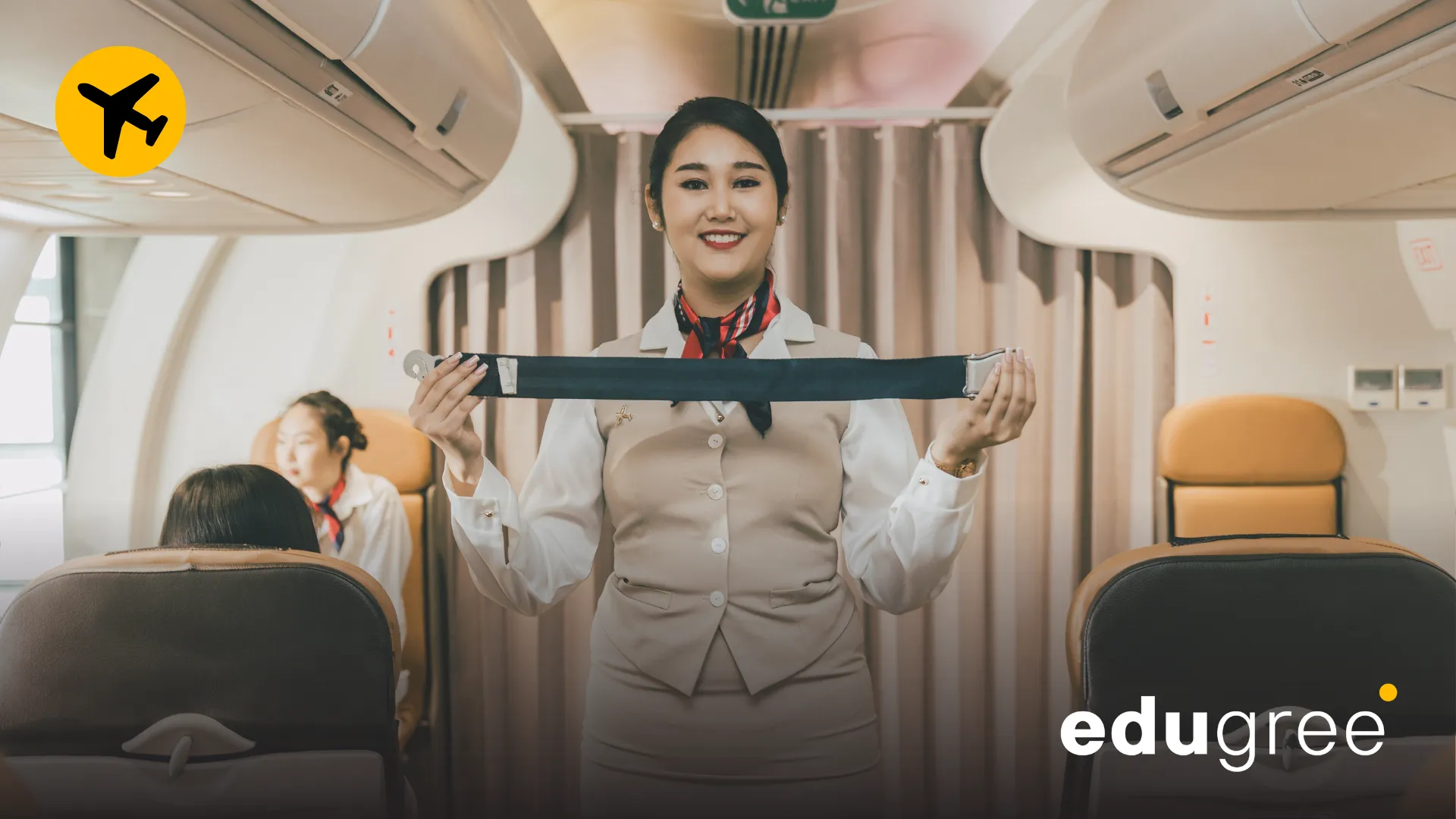

"Sir, can I become an air hostess?"
This is probably the most common question we hear from students and parents during career counselling sessions.
Some students think they are too short.
Some believe only Science students can apply.
Others worry because their English isn't fluent or because they wear spectacles.
The good news is that many of these assumptions are simply myths.
If you dream of working as a cabin crew member, the first step is understanding the eligibility criteria. Every airline has its own recruitment policy, but there are several common requirements that most airlines look for while hiring cabin crew.
In this guide, we'll explain everything you need to know about becoming eligible for a cabin crew career—from educational qualifications and age limits to height, communication skills, medical fitness and personality. We'll also clear up some common misconceptions so you can make an informed decision about your future.
Whether you've just completed Class XII or are planning a career change, this guide will help you understand where you stand and what you can do to improve your chances of getting selected.
Many students ask us,
"Why are airlines so particular about height, communication skills and medical fitness?"
The answer is quite simple.
Cabin crew members are responsible for much more than serving food or welcoming passengers.
Their primary responsibility is passenger safety.
During a flight, cabin crew members may need to:
Because of these responsibilities, airlines have certain eligibility standards to ensure that cabin crew members can perform their duties effectively.
These standards are not meant to discourage aspiring candidates. Instead, they help airlines maintain safety, efficiency and a high level of customer service.
One of the biggest myths is that you need to study Science to become an air hostess.
That's not true.
Students from Arts, Commerce and Science backgrounds can all pursue a career in aviation.
The minimum educational qualification for many airlines is:
Some airlines may also recruit graduates, especially for certain roles or depending on their recruitment requirements.
Your stream is usually less important than your overall personality, communication skills and confidence.
"Sir, I studied Arts. Can I still become an air hostess?"
Absolutely.
Every year, we meet students from Arts, Commerce and Science backgrounds who dream of joining the aviation industry.
Your stream does not decide your future.
Your preparation does.
During counselling sessions, we've noticed that many Arts students hesitate to apply because they think airlines prefer Science students.
In reality, airlines recruit candidates from different educational backgrounds. Instead of worrying about your stream, spend your time improving your communication skills, personality, grooming and interview preparation. Those are the qualities that often make a stronger impression during airline recruitment.
Age is another important eligibility criterion.
For many airlines in India, candidates are generally expected to be 18 years or older at the time of application.
The upper age limit varies depending on:
Experienced cabin crew professionals may sometimes have different age criteria compared to freshers.
Because airline policies change over time, always check the latest recruitment notification before applying.
Many students think,
"I'm already 23 or 24. Am I too late?"
Not at all.
We've counselled students who started their aviation journey after completing graduation or after working in another field for a few years.
As long as you meet the airline's eligibility requirements and prepare well, age alone should not discourage you.
Height is one of the most discussed topics in aviation.
Many students reject themselves before they even apply because they assume they are not tall enough.
Here's what you should know.
For many airlines in India, female candidates are generally expected to have aminimum height of around 155 cm.
Height requirements can vary slightly depending on the airline.
Some airlines may also assess your arm reach, because cabin crew members need to access overhead compartments and safety equipment during flight operations.
The exact reach test and height requirements differ from one airline to another, so it's important to check the latest recruitment guidelines.
No.
Meeting the minimum height requirement simply means you satisfy one part of the eligibility criteria.
Your final selection also depends on several other factors, including:
Many students spend months worrying about height while ignoring the areas they can actually improve.
Focus your energy where it matters most.
"Sir, I'm exactly 155 cm. Can I still apply?"
Yes.
If you meet the airline's minimum height requirement, you should absolutely apply.
Remember, height is only one part of the recruitment process.
Airlines are also looking for candidates who can communicate confidently, maintain professionalism and deliver excellent customer service.
One thing I've observed over the years is that students often reject themselves before the airline ever gets the chance to assess them.
Some think their English isn't good enough.
Some believe their background will hold them back.
Others worry because they come from a small town.
In reality, many of these challenges can be overcome with the right training, consistent practice and a willingness to improve.
Don't eliminate yourself because of assumptions. Learn the actual eligibility criteria, prepare sincerely and let the airline make the final decision.
One of the most important aspects of cabin crew recruitment is medical fitness.
Many students think that airlines expect candidates to be athletes or have perfect health. That's not true.
What airlines generally look for is whether a candidate is medically fit to perform the responsibilities of a cabin crew member safely and efficiently.
Remember, cabin crew members work long hours, stand for extended periods, deal with changing air pressure, assist passengers during emergencies and sometimes work overnight flights. Good overall health helps them perform these duties effectively.
Medical assessments are usually conducted after a candidate clears the interview process. The exact tests and standards vary from one airline to another.
Some airlines may conduct additional medical examinations depending on their internal recruitment policies.
If you have any existing medical condition, it is always better to discuss it honestly during the recruitment process rather than trying to hide it.
"Sir, I wear spectacles. Can I still become an air hostess?"
This is one of the most frequently asked questions.
The answer is:
Possibly, yes.
Many airlines allow candidates with corrected vision, provided they meet the airline's vision standards.
Every airline has its own medical guidelines, so always refer to the latest recruitment notification.
Good vision is important because cabin crew members are responsible for passenger safety.
However, there is another common misconception.
Many students believe that wearing glasses automatically makes them ineligible.
That is simply not true.
Many airlines accept candidates with corrected vision, while others may have specific requirements regarding visual acuity.
Requirements can differ between airlines, so never reject yourself based on information you've heard from friends or social media.
Instead, check the official eligibility criteria of the airline you're applying to.
I've seen students become unnecessarily anxious because they wear spectacles.
My advice is simple.
Don't make assumptions.
Apply if you meet the published eligibility criteria and let the airline's medical team make the assessment.
You might be ruling yourself out without any reason.
If I had to choose one skill that influences cabin crew selection the most, it would probably be communication.
Every day, cabin crew members interact with passengers from different age groups, cultures and backgrounds.
They give safety demonstrations.
Answer passenger queries.
Handle complaints.
Provide reassurance during delays.
Coordinate with fellow crew members.
Because of this, airlines place a lot of importance on communication skills.
Read more on : Communication Skills For Cabin Crew
Not necessarily.
Many students think,
"My English isn't perfect, so I can't become cabin crew."
That's another myth.
You don't need fancy vocabulary.
You don't need an international accent.
You need to communicate clearly, politely and confidently.
Strong communication is something that improves with practice.
Communication isn't only about speaking.
It is equally about listening.
During airline interviews, candidates who listen carefully before answering often create a better impression than those who rush to respond.
Cabin crew members represent the airline.
That is why airlines place importance on professional grooming.
Good grooming does not mean expensive clothes or heavy makeup.
It means presenting yourself neatly and professionally.
Remember,
Professional grooming reflects discipline and attention to detail.
"Sir, I don't know how to groom myself professionally. Will that affect my selection?"
Not at all.
Most students join training institutes to learn these skills.
Professional grooming is a learned skill, not something you're expected to know from the beginning.
Another area where students often become worried is weight.
There is no single weight requirement that applies to every airline.
Instead, many airlines look for a weight that is proportionate to your height and overall fitness.
Maintaining a healthy lifestyle is generally more important than chasing a particular number on the weighing scale.
Good nutrition, regular exercise and physical fitness not only help during recruitment but also support a long and healthy career.
Students ask us about tattoos almost every month.
The answer depends on the airline.
Many airlines expect visible tattoos to be covered while in uniform.
Some airlines have stricter policies than others.
Similarly, visible facial piercings may not be permitted during duty.
Policies change from airline to airline, so always verify the latest guidelines before applying
Airlines have grooming manuals that cover everything from hairstyles and uniforms to accessories, makeup and personal presentation.
Professional appearance is maintained to create a consistent brand image and passenger experience.
Absolutely.
Students from:
can all pursue a career in aviation.
In fact, we've trained students from all three streams.
Your educational stream is usually far less important than your communication skills, confidence, customer service attitude and interview performance.
Don't let your stream stop you from pursuing your dream.
Yes.
This is another misconception that needs to disappear.
Modern airlines recruit both male and female cabin crew members.
Male cabin crew perform the same professional responsibilities, including:
The recruitment process focuses on professionalism, communication skills and overall suitability for the role—not gender
During counselling sessions, we've noticed a few mistakes that many aspiring cabin crew candidates make.
Some students think,
"I'll start speaking English after I join the course."
The earlier you start practising, the better.
Fitness is not just about appearance.
It helps you stay energetic and confident during training and interviews.
Every student has a different personality.
Don't try to imitate someone else's accent or behaviour.
Be the best version of yourself.
Unfortunately, social media is full of misinformation.
Always verify important information through official airline recruitment pages or experienced trainers.
Over the years, I've noticed that students who succeed in airline interviews usually have three qualities in common:
Talent certainly helps.
But consistency usually wins.
If you improve a little every day, you'll be surprised how confident you become after a few months.
One thing I always tell my students is this:
Don't spend months worrying about things you cannot change.
Instead, spend those months improving the things you can change.
You may not be able to change your age or your height.
But you can absolutely improve your communication skills.
You can become more confident.
You can learn professional grooming.
You can improve your body language.
You can prepare for interviews.
Those improvements often make a bigger difference than students realise.
I've seen students from small towns, modest backgrounds and average English-speaking ability go on to build successful careers in aviation—not because they were perfect on day one, but because they kept learning.
The airline isn't looking for perfection. It's looking for potential, professionalism and the willingness to grow.
There is a lot of misinformation about aviation careers. Let's separate myths from facts.
Reality
Students from Arts, Commerce and Science can all pursue a career in aviation, provided they meet the airline's eligibility requirements.
Reality
No.
Airlines look for candidates who can communicate clearly and confidently.
Communication skills improve with practice.
Reality
Modern airlines recruit both male and female cabin crew members.
Professionalism—not gender—is what matters.
Reality
Most airlines have minimum height requirements rather than expecting candidates to be exceptionally tall.
Many students reject themselves without checking the actual criteria.
Reality
Passenger safety is the primary responsibility of every cabin crew member.
Customer service is important, but safety always comes first.
Reality
This couldn't be further from the truth.
Every year, students from small towns and villages build successful careers in aviation.
What matters is your preparation, attitude and willingness to learn.
Every successful journey begins with a dream.
Krinjal Chettri grew up in the Dooars and completed her Class XII from St. James School, Binnaguri.
Like many students, she wondered whether she could build a career in aviation.
She joined Edugree with determination, knowing that she needed to improve her communication skills, confidence and interview techniques.
During her training, she actively participated in mock interviews, grooming sessions and communication classes. Instead of comparing herself with others, she focused on improving a little every day.
Her dedication paid off.
Today, Krinjal Chettri is proudly working as Cabin Crew with IndiGo.
Her story is proof that your background does not decide your future.
Your commitment, discipline and willingness to learn matter far more.
"I wasn't the most confident person when I started. But every communication class and every mock interview helped me improve. Looking back today, I'm glad I believed in the process."
— Krinjal Chettri, Cabin Crew, IndiGo
Yes.
Confidence is developed through practice. Many successful cabin crew professionals were shy when they first started.
Absolutely.
Start improving your English today. Don't wait until the interview is announced.
No.
Your schooling background does not decide your future.
What matters is your willingness to learn and improve.
If you've read this guide from beginning to end, here's one message I'd like you to remember.
Don't reject yourself before the airline evaluates you.
Every year, I meet students who think:
"My English isn't good enough."
"I'm from a small town."
"No one in my family works in aviation."
"Maybe this career isn't for me."
Then, a few months later, I see those same students walking into airline interviews with confidence because they chose to work on themselves instead of doubting themselves.
Eligibility is not just about height or age.
It's also about attitude.
Students who remain curious, disciplined and willing to improve often surprise themselves.
Becoming an air hostess is about much more than meeting a checklist.
Yes, airlines have eligibility criteria for education, age, height, medical fitness and communication skills.
But they also look for qualities that cannot be measured on paper—professionalism, confidence, empathy, teamwork and a positive attitude.
If you meet the basic requirements and are willing to work on your skills, there is no reason not to pursue your dream.
Instead of asking,
"Am I perfect enough?"
Ask yourself,
"Am I willing to improve every day?"
That mindset has helped many aspiring cabin crew members build successful careers.
It can help you too.
At Edugree Aviation Institute, we believe that preparing students for airline recruitment involves much more than classroom teaching.
Our aviation training focuses on:
Our aim is to help students become industry-ready through practical learning and continuous guidance.
For course details, fee structure or admission enquiries:
📞 Contact: 8001554321
If you found this guide helpful, these articles are a great next step:
Soham Dasgupta
Director, Edugree Institute
Soham Dasgupta is the Director of Edugree Institute and has been mentoringstudents for careers in aviation, hospitality and professional communicationfor several years. Through classroom training, career counselling and interviewpreparation, he has guided hundreds of students towards careers in the aviationand hospitality industries.
His writing combines practical industry knowledge with real classroomexperience, helping students and parents make informed career decisions.
.png)


