August 20, 2026

Soham Dasgupta
.svg)

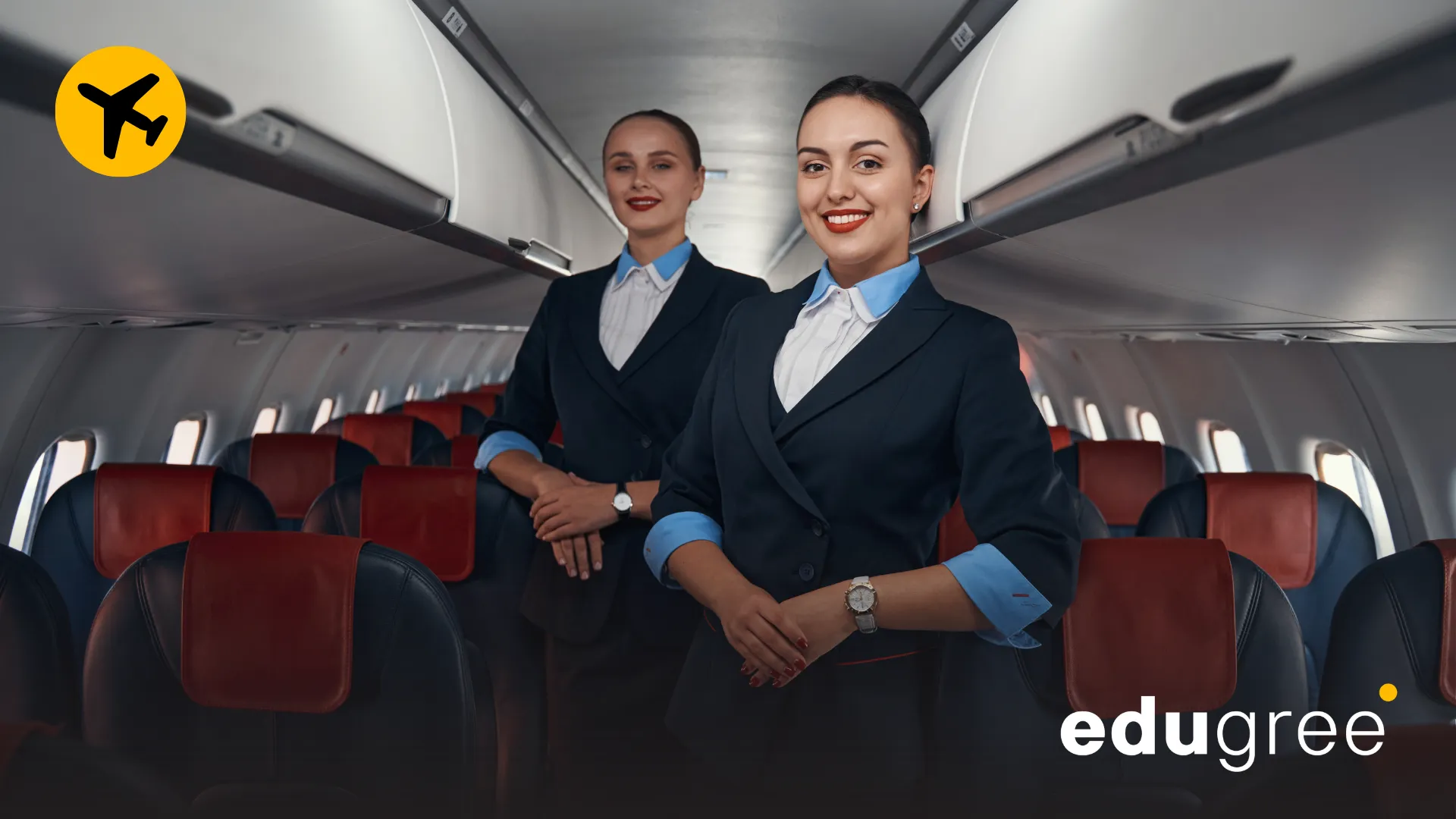

"Sir, what skills do I need to become a Cabin Crew member?"
This is one of the first questions students ask when they visit Edugree. Some believe airlines only look for candidates with fluent English. Others think appearance is the most important factor.
Both ideas contain a little truth - but neither tells the complete story.
Airlines recruit people who can represent their brand professionally while ensuring passenger safety and delivering excellent customer service. That requires much more than good English or a confident smile. Every day, cabin crew members interact with hundreds of passengers from different cultures, solve unexpected problems, work closely with colleagues and remain calm under pressure.
To handle these responsibilities successfully, they need a combination of technical knowledge, communication skills and professional behaviour. The good news is that most of these skills are learned, not inherited.
I've trained students who were initially shy, nervous and unsure of themselves. With consistent practice, constructive feedback and the right guidance, they gradually developed into confident professionals ready for airline interviews.
This guide explains the essential skills airlines look for, why each one matters and practical ways to start developing them—even before your aviation training begins.
Academic qualifications help you meet eligibility requirements. Skills help you perform the job.
Imagine two candidates. Both meet the educational criteria. One communicates confidently, works well in a team and remains calm during difficult situations. The other struggles to communicate and becomes frustrated under pressure.
Who do you think the recruiter is more likely to select?
In many cases, the candidate with stronger professional skills has the advantage. That's because airlines are hiring future team members—not just students with certificates.
During aviation training, you'll develop different kinds of skills.
These are technical abilities that can be taught through structured training.
Examples include:
Soft skills influence how you interact with people.
Examples include:
Interestingly, recruiters often say that technical knowledge can be taught more quickly than professional behaviour.
That's one reason soft skills receive so much attention during interviews

Passengers remember more than just the service they receive. They remember how they were treated.
A calm explanation during a flight delay. A reassuring smile for a nervous first-time flyer. A polite response to a difficult question. These moments shape the passenger's experience. That's why airlines look for candidates who demonstrate professionalism in every interaction.
Professional behaviour includes:
These qualities build trust with both passengers and colleagues.
Absolutely.
This is one of the most encouraging aspects of preparing for an aviation career. Very few students begin their journey with every skill already developed.
Every small improvement contributes to your future career.
Let's clear up a few common myths.
"Only people with perfect English become Cabin Crew."
Reality:
Clear, confident communication is more important than using complicated vocabulary.
"Confidence is something you're born with."
Reality:
Confidence usually grows through preparation and repeated practice.
"Only extroverts succeed in aviation."
Reality:
Many successful cabin crew professionals are naturally quiet but communicate thoughtfully, listen well and work effectively with people.
"Skills can only be learned after joining an aviation institute."
Reality:
Many skills—such as communication, reading, public speaking, teamwork and time management—can be developed long before formal training begins.
You don't have to wait until your first class.
Simple daily habits can make a big difference.
For example:
Learning begins with observation. Improvement begins with action.
Whenever students ask me how to become more confident, I rarely tell them to "be confident." Instead, I encourage them to practise something every day.
It grows from repeated action.
One lesson has stayed with me after years of training students. The students who succeed are not always the most talented.
"Am I good enough?"
and start asking,
"Which skill can I improve today?"
That simple change in mindset often becomes the beginning of real progress.
Every flight is different. Every passenger is different. Every situation is different.
That's why cabin crew professionals rely on a combination of technical knowledge, communication and personal qualities to perform their role effectively.
Let's explore the skills that airlines value most.
.png)
Communication is the foundation of every cabin crew role.
Whether you're greeting passengers, making announcements or assisting during an emergency, your ability to communicate clearly directly affects the passenger experience.
Good communication means:
How to Improve
(Want to improve this skill? Read our complete guide on Communication Skills for Cabin Crew.)
Passengers don't just want answers. They want to feel heard. Listening carefully helps you understand concerns before responding.
For example, a passenger who says they are "not feeling well" may need medical assistance—or they may simply be anxious about flying. Listening helps you respond appropriately.
How to Improve
.png)
Cabin crew are hospitality professionals in the sky.
Every interaction contributes to the airline's reputation.
Excellent customer service includes:
Real Example: A delayed meal service can become a complaint—or an opportunity to reassure passengers through polite communication.
A successful flight depends on teamwork.
Cabin crew constantly coordinate with:
Good teamwork creates a safer and smoother journey for everyone.
How to Improve: Join group activities, volunteer during events and learn to support others instead of always trying to lead.
Confidence doesn't mean speaking loudly. It means believing in your preparation. Confident cabin crew communicate clearly, make decisions calmly and reassure passengers during stressful situations.
Build Confidence By
Confidence grows through action.
No two days in aviation are the same. Flights may be delayed. Schedules may change. Unexpected situations can arise without warning. Cabin crew must adapt quickly while maintaining professionalism.
How to Improve: Be open to new experiences, accept feedback and develop a flexible mindset.
Cabin crew regularly solve small challenges before they become larger problems.
Examples include:
Good problem-solvers stay calm, gather information and look for practical solutions.
Emotional intelligence means understanding both your own emotions and those of others.
This helps cabin crew:
Passengers often remember kindness long after the flight is over.
How to Improve: Pay attention to how people feel, not just what they say.
Not every passenger is in a good mood. Some may be tired, anxious or frustrated. Patience allows cabin crew to respond professionally instead of emotionally.
Remember: A calm response often resolves situations faster than an argument.
.png)
Your appearance communicates professionalism before you even speak.
Good grooming reflects:
Professional grooming also increases self-confidence during interviews.
(Learn more in our detailed Cabin Crew Grooming Guide.)
Airlines operate on precise schedules.
Cabin crew must manage their time efficiently throughout the flight.
Examples include:
Being organised helps reduce stress.
Improve This Skill: Use daily planners, arrive early for commitments and practise completing tasks within a set time.
.png)
Even junior cabin crew members demonstrate leadership.
Leadership doesn't always mean giving instructions.
It also means:
Professional leadership builds trust within the crew.
Passengers travel from different countries, cultures and backgrounds.
Respecting these differences is essential.
Cultural awareness includes:
A respectful attitude creates a welcoming environment for everyone.
Aviation can be demanding. Busy flights, delays and unexpected situations require emotional balance. Cabin crew who manage stress effectively remain focused and make better decisions.
Healthy Stress Management Habits
Preparation reduces anxiety.
.png)
Perhaps the most underrated skill of all.
A positive attitude influences every other skill.
It helps you:
Recruiters often notice attitude before they notice talent.
Yes.
Not in one week. Not in one month. But certainly over time.
Every professional cabin crew member started somewhere. The difference is that successful professionals never stop learning. Improvement happens one conversation, one presentation and one flight at a time.
.png)
Many students wonder: "How do recruiters assess these skills?"
They observe them throughout the interview.
For Example:
This is why every part of your preparation matters—not just memorising answers.
One exercise I encourage students to follow is the "One Skill Per Week Challenge."
Instead of trying to improve everything at once, choose one skill each week.
For example:
By focusing on one area at a time, improvement becomes more manageable and long-lasting.
Students sometimes ask me,
"Sir, which is the most important skill?"
I usually smile and ask them another question.
The answer is no.
These skills work together. Think of them as different parts of the same aircraft. Every part has a purpose. When they work together, the journey becomes smooth and successful.
That's exactly how professional development works.
One of the biggest mistakes students make is trying to improve everything at once.
When everything becomes the priority, it's easy to become overwhelmed.
Instead, focus on steady improvement. Thirty days of consistent practice can help you build habits that support your long-term aviation career.
The first week is about creating good habits.
The objective is not perfection. The objective is consistency.
This week, begin interacting more with people.
You'll gradually notice that speaking becomes more natural.
Now start thinking like a cabin crew professional.
Practise situations such as:
Learning by doing is one of the fastest ways to build confidence.
During the final week, combine everything you've learned.
Every day:
By the end of four weeks, you'll notice visible improvement in both confidence and professionalism.
Small daily habits often have the biggest long-term impact.
Try to include these in your routine:
Remember, successful professionals never stop learning.
Even talented candidates sometimes develop habits that hold them back.
Avoid these common mistakes:
Preparation creates confidence—not the other way around
A. Krinjal Chettri – Building Skills Through Practice
After completing Class XII from St. James School, Binnaguri, Krinjal joined Edugree with a dream of entering the aviation industry. Through communication training, grooming sessions, mock interviews and classroom activities, she steadily improved her confidence and professional skills. Today, she is proudly associated with IndiGo Airlines, proving that consistent effort can lead to meaningful career opportunities.
B. Pushpanjali Gurung – Growing One Skill at a Time
Pushpanjali Gurung from Prashanti Vidya Mandir, Gangtok understood that success isn't built in a single day. She worked patiently on her communication, teamwork, grooming and interview preparation throughout her course. Today, she is also working with IndiGo Airlines, inspiring aspiring aviation students from across the region. Their journeys remind us that professional skills are developed through commitment, guidance and regular practice.
Whenever students ask me,
"Sir, how can I become the best candidate?"
I tell them not to chase perfection. Instead, become a little better every day. Read one more page. Practise one more interview question. Improve one more habit. Over time, those small improvements create a confident professional. The aviation industry rewards consistency farmore than shortcuts.
Becoming a successful cabin crew professional requires much more than meeting the eligibility criteria. Airlines look for candidates who communicate clearly, work well with others, remain calm under pressure and genuinely enjoy helping people. The encouraging news is that these skills can be developed.
Start with small daily improvements.
One day, you'll realise that the skills you worked so hard to build have become your greatest professional strengths.
If you're planning a career as a Cabin Crew professional and would like structured guidance, practical training and personalised feedback, you're welcome to visit Edugree Institute, Siliguri.
Our trainers help students build the communication, confidence, grooming and professional skills that airlines value through hands-on learning and continuous practice.
You may also find these guides helpful:
.png)


